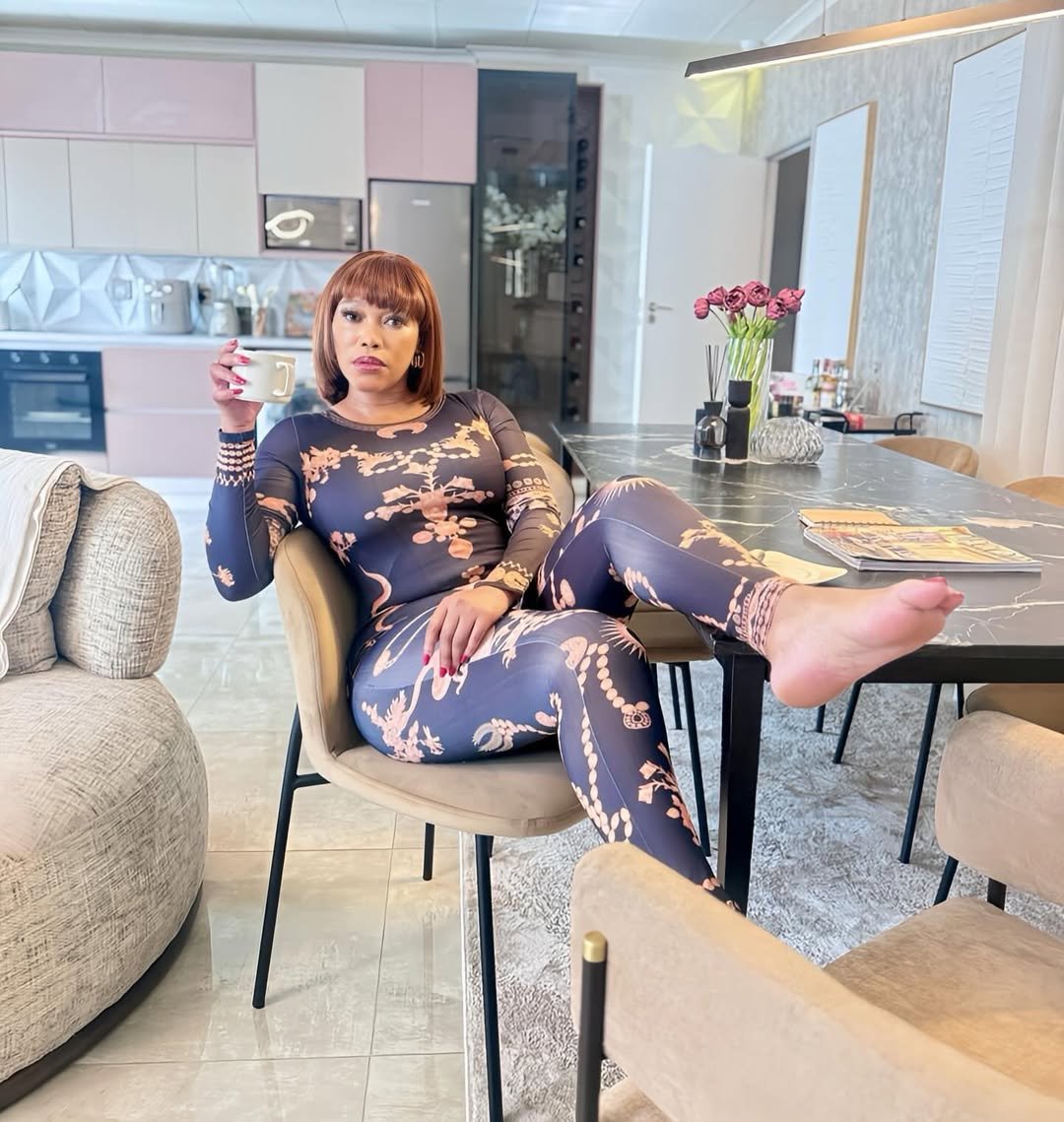
South African actress Sonia Mbele has found herself at the centre of a heated social media storm after outspoken music executive Nota Baloyi publicly criticised her parenting choices.
The controversy began when Baloyi, known for his unfiltered opinions on X (formerly Twitter), accused Mbele of allowing a Zimbabwean national to raise her children. His comments quickly went viral, sparking widespread debate and drawing strong reactions from both supporters and critics.
Many social media users came to Mbele’s defence, calling Baloyi’s remarks inappropriate and xenophobic. Critics argued that parenting decisions are deeply personal and should not be subjected to public judgment—especially when framed around nationality. Others pointed out that South Africa’s ongoing struggles with xenophobia make such statements particularly sensitive and potentially harmful.
However, some users echoed Baloyi’s sentiments, questioning the dynamics of parenting and cultural influence within families. This divide has fueled an intense online conversation, with hashtags related to the issue trending across platforms.
Sonia Mbele has not issued a detailed public response to the remarks at the time of writing, but her supporters have continued to rally behind her, praising her career and her role as a mother. Many have urged the public to respect her privacy and avoid turning personal matters into public spectacle.
Nota Baloyi, no stranger to controversy, has previously made headlines for his outspoken views on celebrities and industry figures. His latest comments have once again placed him under scrutiny, with some calling for greater accountability for influential voices on social media.
The incident highlights broader societal tensions in South Africa, where discussions around nationality, identity, and social cohesion remain complex and often divisive. It also underscores the growing impact of social media in shaping public narratives and amplifying personal disputes.
As the conversation continues to unfold online, the situation serves as a reminder of the fine line between public commentary and personal boundaries—particularly when it comes to family matters.