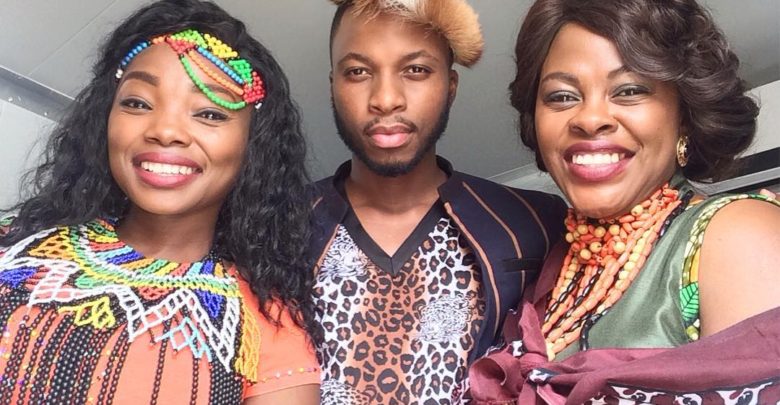
Content creator Banele “Moghelingz” Ndaba has found himself at the centre of a heated social media debate following an appearance on SABC, where he openly praised the South African Revenue Service (SARS) for its growing focus on social media influencers and digital content creators.
During the televised interview, Banele spoke positively about SARS’ efforts to monitor and engage influencers, suggesting that the move could help professionalise the content creation industry. He explained that increased oversight might encourage creators to take their work more seriously as businesses, including understanding their tax responsibilities and ensuring proper compliance.

While his comments appeared measured and forward-thinking on air, the reaction online told a very different story. Shortly after the interview aired, a clip began circulating on X (formerly Twitter), quickly gaining traction and drawing strong opinions from users across the platform.
Rather than sparking constructive discussion, the clip was met with widespread criticism. Many users accused Banele of sounding scripted, rehearsed, or even paid to deliver a specific message. Several questioned the authenticity of his praise for SARS, arguing that his tone and choice of words felt unnatural compared to his usual online persona.
One user mockingly suggested that the segment sounded like a sponsored advertisement, while another claimed it was easy to “spot a paid promo from a mile away.” Others echoed similar sentiments, saying the delivery felt forced and out of character for the content creator they were familiar with.

Beyond accusations of sponsorship, some critics questioned Banele’s understanding of business and tax matters altogether. A number of users argued that he does not typically speak in such formal or technical terms, leading them to doubt whether the views expressed were genuinely his own. For these critics, the interview raised concerns about influencers being used as messengers for institutions without fully grasping the complexities of the issues they are discussing.
The backlash did not stop with Banele alone. SARS itself became a target of online frustration, with some users expressing suspicion about the tax authority’s communication strategy. One comment suggested that SARS may now be paying influencers to soften public perception or push its messaging to younger, digital-first audiences. Others viewed the move as unnecessary or opportunistic, particularly in a climate where many South Africans already feel burdened by economic pressure and taxation.
However, not all reactions were entirely negative. A smaller group of users argued that Banele’s message, while poorly received, raised an important point. They noted that content creation has evolved into a legitimate income stream for many young people and that tax compliance is an unavoidable part of operating as a professional. From this perspective, SARS’ engagement with influencers could be seen as a sign that the industry is being taken seriously.
Still, the dominant narrative online remained critical. For many, the issue was less about the message itself and more about trust, transparency and authenticity. In an era where influencer marketing is widespread, audiences have become increasingly sensitive to anything that appears staged or commercially driven — especially when it involves government institutions.
Banele has not publicly responded to the backlash at the time of writing, leaving room for speculation about whether the interview was sponsored or simply misinterpreted. Regardless, the incident highlights the fine line influencers walk when discussing policy, finance and government-related topics. What may be intended as informative commentary can quickly turn into controversy if audiences feel misled or spoken down to.
The debate also underscores a broader tension between digital creators and traditional institutions. As social media continues to shape public discourse, collaborations and conversations between influencers and state bodies are likely to increase — but so too will scrutiny from the public.
For now, Banele “Moghelingz” Ndaba’s interview serves as a reminder that influence comes with responsibility, and that public perception can shift rapidly in the age of viral clips and online commentary.