President Cyril Ramaphosa has strongly defended the credibility of South Africa’s electoral system and the Independent Electoral Commission (IEC), while criticising ongoing claims by the MK Party that the 2024 general election was rigged.
Speaking during his response to Parliament’s debate on the Presidency Budget Vote, Ramaphosa expressed concern over continued attacks on the country’s electoral processes, warning that undermining confidence in democratic institutions could have broader consequences as South Africa prepares for the 2026 local government elections.
The President’s remarks come amid growing political tensions and renewed debate over the integrity of the 2024 election, which resulted in the African National Congress (ANC) losing its parliamentary majority for the first time since the advent of democracy.
Addressing Members of Parliament, Ramaphosa said South Africans would once again head to the polls in a matter of months to elect local government representatives responsible for running municipalities across the country.
“Five months from now, South Africans will participate in local government elections where they will signal with their votes how they want their municipalities to be run,” he said.
He emphasised that the elections would be administered by the Independent Electoral Commission, which he described as one of the country’s most respected democratic institutions.
“The elections will be overseen by the Independent Electoral Commission (IEC), one of our finest and most trusted institutions, constitutionally mandated to safeguard democracy,” Ramaphosa stated.
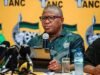
The President took direct aim at the MK Party’s repeated allegations that the 2024 general election was manipulated, saying he was disappointed to hear continued criticism of the electoral body.
“It was quite disappointing to hear aspersions being cast on the IEC by a member of this House,” he said.
Ramaphosa reminded Parliament that South Africa has built a strong electoral track record since the end of apartheid, noting that the country has successfully conducted multiple national, provincial and local government elections under the supervision of the IEC.
“Since 1994, South Africa has held seven national and provincial elections and six local government elections,” he said.
“Without exception, all of them were declared free and fair and took place under conditions free from violence.”
The President argued that South Africa’s electoral system remains one of the strongest examples of democratic governance on the African continent and globally.
He noted that while many countries around the world are experiencing democratic instability, disputed elections and declining trust in institutions, South Africa continues to benefit from a constitutional framework that protects political participation and the peaceful transfer of power.
Ramaphosa said the country’s democratic achievements should not be taken for granted and credited the IEC for playing a central role in maintaining public confidence in elections over the past three decades.
Political analysts have warned that disputes over election outcomes could become a significant issue ahead of the 2026 local government elections, particularly as competition for municipal control intensifies across the country.
The local elections are expected to be highly contested, with political parties seeking to strengthen their influence in municipalities amid ongoing concerns about service delivery, infrastructure failures, corruption and unemployment.
Ramaphosa urged political parties, civil society organisations and ordinary citizens to support the work of the IEC and safeguard the integrity of the democratic process.
He stressed that public trust in elections remains essential to maintaining political stability and ensuring that citizens can exercise their constitutional right to choose their leaders freely and fairly.
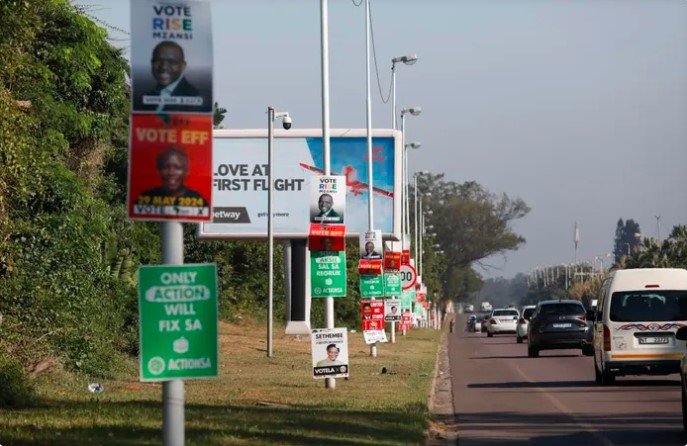
With campaigning expected to intensify in the coming months, debates around governance, accountability and electoral integrity are likely to remain central issues as South Africans prepare to return to the ballot box on 4 November 2026.
Here’s a concise summary of the report:
Cyril Ramaphosa defended the credibility of the Independent Electoral Commission (IEC) and rejected claims by the MK Party that the 2024 general election was rigged.
Speaking during Parliament’s debate on the Presidency budget vote, Ramaphosa described the IEC as one of South Africa’s most trusted democratic institutions.
He noted that since 1994, all national, provincial and local elections have been declared free and fair.
The president said South Africans are expected to vote in the 2026 local government elections on 4 November, and urged citizens and political parties to support the electoral process.
Ramaphosa also linked the upcoming elections to broader local government reforms aimed at improving municipal performance.
Proposed reforms in the Draft Revised White Paper on Local Government include:
Reducing overlaps in municipal powers and responsibilities.
Reorganising water and electricity service delivery.
Introducing a utility model that would ring-fence and professionally manage these services.
Strengthening municipal financial accountability.
The president argued that effective local government is essential for economic development, service delivery and the overall progress of the country.
The key political message from his remarks was a defence of the IEC’s integrity and a warning against undermining public confidence in South Africa’s electoral system ahead of the 2026 local government elections.