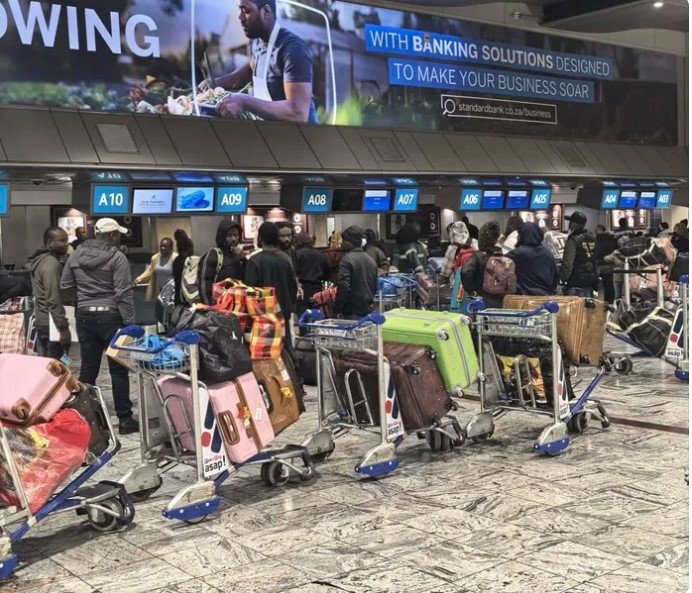
More than 660 Ghanaian nationals were repatriated from South Africa over the weekend in one of the largest coordinated voluntary return operations conducted through OR Tambo International Airport in recent years.
The operation, facilitated through cooperation between South African authorities and the Government of Ghana, comes at a time of heightened national focus on immigration management, border security, and the enforcement of immigration laws.
According to the Border Management Authority (BMA), a total of 663 Ghanaian nationals were processed for repatriation on two chartered flights departing from Johannesburg. While most travellers completed their journeys successfully, several passengers were prevented from boarding after being deemed medically unfit to travel.
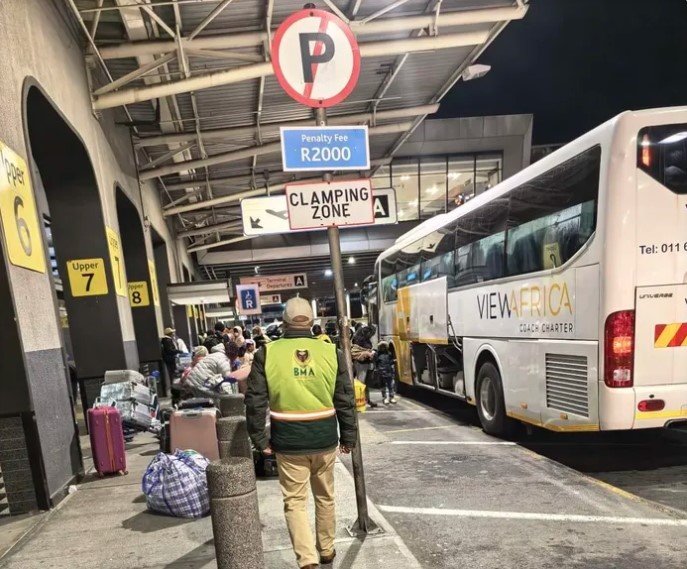
The operation was coordinated through the Port Management Committee, which includes multiple government departments and agencies responsible for managing legal movement across South Africa’s ports of entry.
First Repatriation Flight
The first group arrived at OR Tambo International Airport on Saturday and consisted of 332 Ghanaian nationals who were processed for departure.
Immigration officials conducted extensive verification procedures before clearing travellers for departure. Among the group, 170 individuals travelled using ordinary Ghanaian passports, while 162 were processed using Emergency Travel Certificates issued by the Ghanaian High Commission in Pretoria.
Emergency Travel Certificates are temporary documents issued to citizens who do not possess valid passports but need to return to their country of origin.
During immigration screening, authorities determined that 321 travellers had overstayed their legal period of stay in South Africa by more than 30 days. In accordance with immigration legislation, these individuals were declared undesirable, a designation that may affect their ability to re-enter South Africa for a specified period.
At the conclusion of the process, 323 passengers were cleared to board the charter flight arranged by the Government of Ghana.
However, nine passengers were removed from the flight before departure. The group included two families with five children. Airline personnel identified two adults as medically unfit to travel, prompting intervention by airport paramedics who transferred the individuals to the airport clinic for further assessment and treatment.
Second Group Processed on Sunday
A second repatriation operation took place on Sunday when a further 331 Ghanaian nationals were brought to the airport for processing.
Immigration officials again conducted documentation checks and verification procedures before authorising departures.
Of those processed, 117 travellers held ordinary Ghanaian passports, while 90 travelled using Emergency Travel Certificates. In addition, 37 children born in South Africa were processed using the same temporary travel documentation.
Authorities also processed 25 asylum seekers who voluntarily withdrew their asylum applications as part of the repatriation process.
During screening, immigration officials found that 170 travellers had exceeded their permitted period of stay in South Africa by more than 30 days. These individuals were similarly declared undesirable under immigration regulations.
At the end of the operation, 341 passengers were approved for departure, including 10 deportees transferred from the Lindela Repatriation Centre by the Department of Home Affairs.
One traveller ultimately failed to check in, while the remaining 340 passengers boarded the chartered flight, which departed on schedule.
Cooperation Between South Africa and Ghana
Authorities described the repatriation process as an example of effective international cooperation between South Africa and Ghana in managing migration matters.
Officials from both countries worked closely to verify identities, issue travel documentation where necessary, coordinate transportation logistics, and ensure compliance with immigration requirements.
The operation highlights the growing role of diplomatic missions in facilitating voluntary returns and assisting citizens who wish to return to their home countries.
Immigration experts note that such coordinated repatriation efforts can reduce administrative burdens on host countries while ensuring that returns are conducted in an orderly, lawful, and humane manner.
Increased Focus on Migration Management
The repatriation operation takes place against a backdrop of increasing public debate around immigration and border management in South Africa.
In recent weeks, concerns surrounding undocumented migration have dominated national discussions amid protests in parts of Gauteng, KwaZulu-Natal, and the Western Cape. Several communities have called for stronger enforcement of immigration laws, while government leaders have urged citizens to avoid xenophobia and allow law enforcement agencies to carry out their duties.
The issue has gained further prominence as growing numbers of foreign nationals seek assistance from diplomatic missions regarding voluntary return programmes and documentation services.
Ramaphosa Announces Tougher Measures
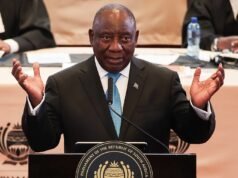
The repatriation also follows President Cyril Ramaphosa’s recent national address outlining a comprehensive strategy to strengthen immigration enforcement and improve migration management.
The government’s new approach includes intensified inspections, arrests, prosecutions, and deportations of undocumented migrants, alongside stricter penalties for employers who hire individuals illegally.
Authorities also plan to strengthen border security through investments in surveillance technology, infrastructure upgrades, and additional personnel. Refugee reception centres are expected to be relocated closer to major border posts to improve the processing of asylum applications.
Additional reforms include the introduction of biometric-based digital identification systems, the gradual phase-out of green bar-coded identity documents, and measures aimed at reducing identity fraud and document abuse.
Government is also pursuing amendments to immigration and labour legislation, including the introduction of employment quotas for foreign workers in certain sectors and stronger regulation of informal businesses.
At a regional level, South Africa intends to work more closely with African governments and regional organisations to address the underlying causes of migration, including poverty, unemployment, instability, and limited economic opportunities.
A Sign of Changing Immigration Enforcement
The successful repatriation of hundreds of Ghanaian nationals reflects South Africa’s increasingly coordinated approach to migration management and immigration enforcement.
Officials have emphasised that lawful migration remains an important component of regional integration and economic development. However, they maintain that compliance with immigration laws, effective border management, and cooperation between governments are essential to ensuring orderly migration.
As immigration remains one of the country’s most closely watched policy issues, authorities are expected to continue implementing stricter enforcement measures while expanding cooperation with foreign governments to facilitate lawful movement and voluntary returns where necessary.