Actor, dancer and performer Hungani Ndlovu is taking another major step in his creative career, moving into directing with the dance-theatre production Musical Chairs, which arrives in Cape Town this week.
The production runs from August 19 to 23 at Magnet Theatre in Observatory, following successful Johannesburg seasons that helped establish the work as an ambitious fusion of South African street dance, contemporary theatre and social commentary.
For Ndlovu, the production represents more than another acting opportunity. He is taking on multiple responsibilities as director and executive producer while also performing on stage.
The move marks an expansion of a career that has already taken him from dance studios to television, film, theatre and music.
From dancer to director
View this post on Instagram
Ndlovu’s transition into directing is a natural progression for an artist whose career began with movement.
Before becoming widely recognised as an actor, he developed his craft as a dancer and later trained in acting for film at the New York Film Academy.
His experience across different performance disciplines has shaped the way he approaches storytelling.
With Musical Chairs, that background becomes particularly important because the production relies heavily on physical expression rather than conventional dialogue.
The story is communicated through movement, rhythm, facial expression and interaction between performers.
Ndlovu previously explained that he was drawn to the project because he believed its themes could reach audiences well beyond the dance community.
The production began as a piece performed in a dance studio before Ndlovu encouraged its creators to take it into a theatre environment.
His involvement eventually expanded to directing and performing.
A childhood game becomes a metaphor for modern life

At first glance, Musical Chairs takes its inspiration from one of the simplest games many people remember from childhood.
But on stage, the game becomes a metaphor for the pressures of contemporary society.
The central question is what happens when the music stops and there is no chair left.
That familiar moment of competition becomes a way of exploring what it means to feel excluded, overlooked or disconnected.
The production examines the desire to be seen, accepted and valued, particularly in an era when social media has transformed the way people build relationships and present themselves to the world.
It looks at how the pursuit of attention and validation can influence friendships, romantic relationships, identity and a person’s sense of belonging.
Rather than presenting social media simply as good or bad, the production explores the complicated relationship people have with digital spaces.
A story told without conventional dialogue
One of the most distinctive aspects of Musical Chairs is its reliance on dance and physical theatre.
The production brings together South African street-dance traditions such as iPantsula and iBhujwa with international styles including Hip Hop, Campbellocking and Popping.
These forms are combined with contemporary and physical theatre to create a visual language capable of telling the story without depending on lengthy spoken scenes.
Ndlovu has previously described dance as a language that can cross linguistic and cultural boundaries.
That approach is central to the production.
Instead of asking audiences to follow a conventional script, Musical Chairs invites them to interpret movement, rhythm and physical interaction.
The result is a theatrical experience that can communicate ideas about connection and isolation without requiring every emotion to be explained through words.
A production that keeps evolving

The Cape Town season follows several stages in the production’s development.
Musical Chairs first attracted attention during its early presentation before moving into a full theatre production.
Its Johannesburg run was subsequently followed by another season after demand for the work grew.
A review of the production’s Johannesburg run highlighted the energy of its performers and the way the show combines dance, popular culture and audience interaction.
That response has helped reinforce the idea that the production can appeal to audiences beyond traditional dance enthusiasts.
For Ndlovu, taking the show to Cape Town is another step towards establishing Musical Chairs as a touring production rather than a limited Johannesburg project.
The creative team
Ndlovu is joined by Yemimah Jacobs, Jamie-Lee Jansen and Genesis Shirindza, alongside international performers Alain “Hurrikane” Lauture and Angela “Angyil” McNeal.
Shirindza, one of the creative forces behind The Locksmiths Collective, has played a significant role in shaping the production.
The collaboration brings together performers with different experiences and movement styles, allowing the show to move between local South African dance traditions and international street-dance forms.
That mixture is important to the production’s identity.
Rather than presenting South African street dance as an isolated form, Musical Chairs places it in conversation with international movement cultures.
Why social media matters to the story
The production’s themes are particularly relevant at a time when social media plays an increasingly influential role in people’s relationships and self-image.
Platforms built around likes, followers, comments and short-form content can create opportunities for connection while simultaneously intensifying the pressure to perform a particular version of oneself.
For young people especially, questions about popularity, acceptance and belonging can become closely tied to online visibility.
Musical Chairs takes those experiences and translates them into physical theatre.
The performers effectively turn the stage into a social space where characters compete for attention, form connections, fall out and search for somewhere to belong.
The metaphor of the empty chair becomes increasingly powerful because it speaks to a fear many people understand: being the person left standing when everyone else has found a place.
Ndlovu’s expanding creative ambitions
The directing role represents another step in Ndlovu’s evolution as a creative.
He has previously spoken about wanting to direct more theatre and television productions, describing directing as a new and exciting avenue through which he can continue developing as an artist.
His career has already crossed several disciplines.
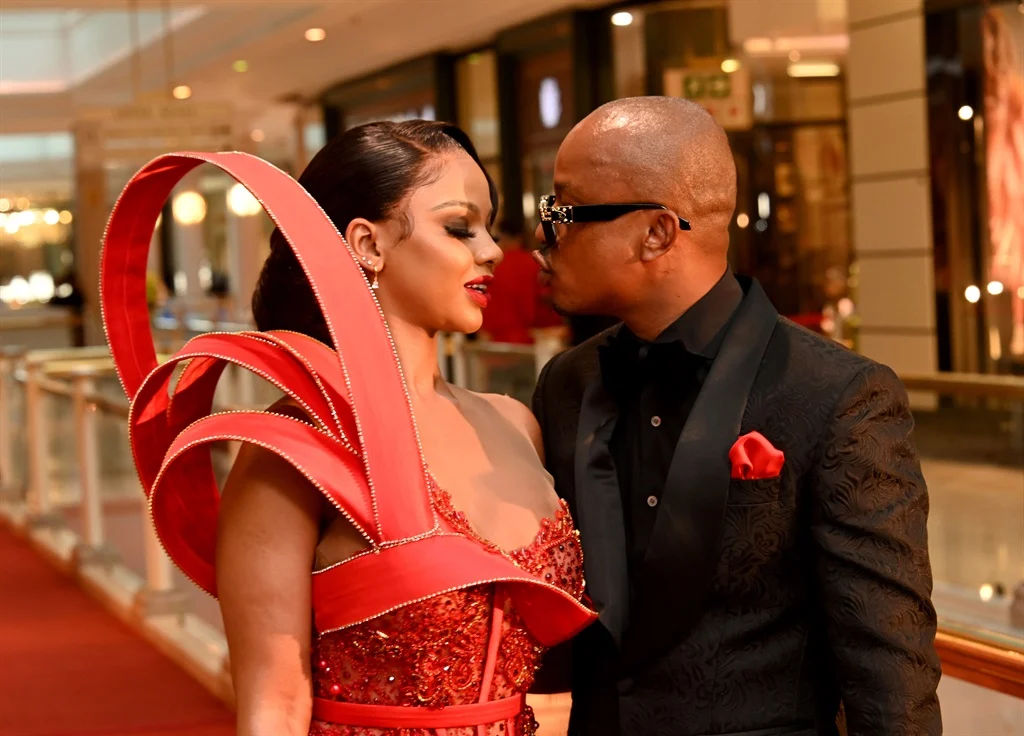
He has worked as a professional dancer, actor, DJ, MC and content creator, while also building a public profile through projects with his wife, actress Stephanie Ndlovu.
His early career included the role of Romeo Medupe on Scandal!, while he later became known to television audiences as Tbose Maputla on Skeem Saam.
The move into directing therefore does not represent a departure from his previous work so much as another extension of his creative interests.
More than a dance show
Although dance is at the heart of Musical Chairs, the production is ultimately concerned with human relationships.
Its creators use movement to examine questions that extend beyond social media and into everyday life.
Who gets noticed?
Who gets left behind?
How much of ourselves do we change to fit into a particular group?
And what happens when the need to be accepted begins to influence how we see ourselves?
Those questions give the production a wider relevance.
The childhood game at the centre of the title becomes a mirror of adult life, where opportunities, relationships, jobs, social circles and even online attention can sometimes feel like a limited number of chairs competing for a growing number of people.
Cape Town season
Cape Town audiences will have the opportunity to experience the production from August 19 to 23 at Magnet Theatre in Observatory.
The venue is situated at the Old Match Factory on the corner of St Michaels and Lower Main Roads, an area with a long association with independent and experimental theatre.
Performances are scheduled for 7.30pm to 8.30pm, with tickets priced at R199.95.
Tickets are available through Webtickets.
For audiences familiar with Ndlovu primarily through television, Musical Chairs offers a different view of the performer — one that places his dance background and growing ambitions as a director at the centre of the experience.
For Ndlovu himself, the Cape Town season represents another opportunity to prove that dance can be more than entertainment.
It can be storytelling, social commentary and a way of asking difficult questions about how people live and connect.
And as Musical Chairs continues its journey from Johannesburg to Cape Town, Ndlovu’s own journey from dancer and actor to director is moving into a new chapter.