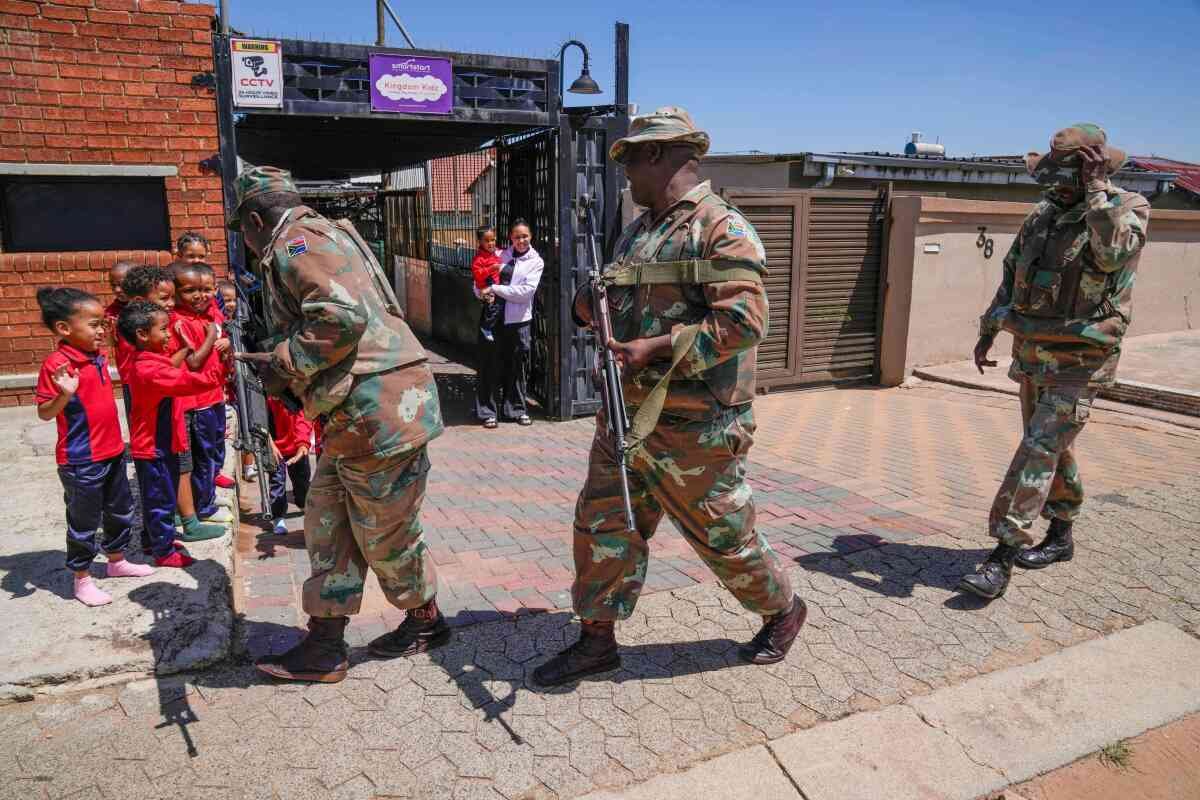
Acting Police Minister Firoz Cachalia has acknowledged that Operation Prosper, the joint South African Police Service (SAPS) and South African National Defence Force (SANDF) initiative aimed at tackling gang violence and organised crime, has not yet succeeded in dismantling a single gang since troops were deployed earlier this year.
The admission came in a written reply to parliamentary questions, where Cachalia outlined the progress of the operation while indicating that authorities are now shifting to a more targeted strategy focused on dismantling criminal organisations rather than disrupting their day-to-day activities.
According to Cachalia, the operation is moving beyond its initial stabilisation phase and entering a second stage designed to identify, disable and ultimately dismantle organised criminal groups.
He explained that, in law enforcement terms, a gang is regarded as “dismantled” only when the criminal organisation effectively ceases to operate, including the disruption of its leadership, structures, operations and recruitment capacity. While numerous arrests have been made, authorities have not yet reached that threshold.
Hundreds arrested during first phase 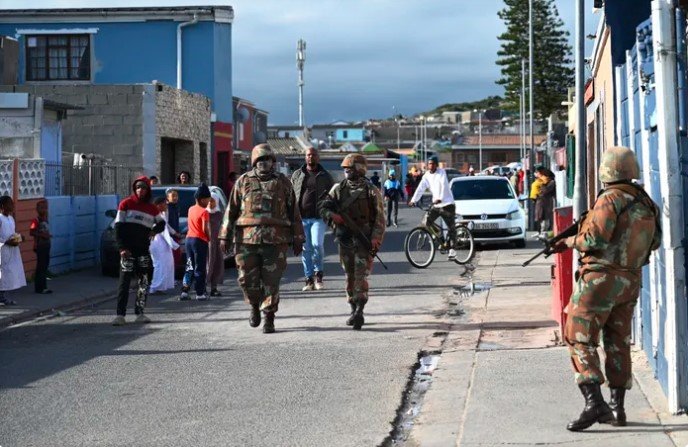
Operation Prosper was launched following President Cyril Ramaphosa’s announcement during the 2026 State of the Nation Address authorising a 12-month military deployment in support of SAPS.
The deployment, estimated to cost more than R800 million over its duration, focuses primarily on combating gang violence in the Western Cape and illegal mining operations in Gauteng.
Although the nationwide deployment officially commenced in April, military support for operations targeting illegal mining in Gauteng began earlier under a separate presidential authorisation.
Cachalia told Parliament that joint SAPS-SANDF operations resulted in 916 arrests during April alone. Among those arrested were 34 suspects allegedly involved in drug trafficking and distribution.
Authorities also recovered 21 firearms during the operations, alongside significant quantities of illegal drugs.
The seizures included ecstasy tablets, more than 6,000 mandrax tablets, hundreds of kilograms of mandrax powder and over 30,000 prescription tablets suspected of being traded illegally.
Police also confiscated more than 1.2 tonnes of cannabis, several kilograms of cocaine, crack cocaine, crystal methamphetamine (tik), heroin, khat and nyaope, highlighting the scale of the illicit drug trade linked to organised criminal networks.
While the seizures are regarded as operational successes, Cachalia conceded that they have not yet translated into the dismantling of established gang structures.
Opposition questions value for money
The Democratic Alliance has criticised the results of the operation, arguing that the government’s own figures raise serious questions about whether the deployment is delivering meaningful outcomes.
DA Member of Parliament Lisa Schickerling said Cachalia’s acknowledgement that no gangs had been dismantled after several months represented a concerning assessment of an operation presented as a major intervention against gang violence.
She argued that residents of gang-affected communities, particularly on the Cape Flats, had been promised safer neighbourhoods, reduced violence and the restoration of state authority. Instead, she said, shootings and gang-related crime continue to affect daily life in many communities.
According to Schickerling, the continued presence of gang leaders despite the deployment demonstrates the need for a different policing strategy.
The DA has called for greater investment in intelligence-led policing, specialised anti-gang investigative units, experienced detectives and coordinated prosecutions capable of targeting criminal leadership rather than lower-level gang members.
She argued that while arrests and drug seizures remain important, lasting success will depend on dismantling command structures, disrupting criminal finances and securing successful prosecutions against gang bosses.
Focus shifts to dismantling organised crime
Cachalia indicated that the next phase of Operation Prosper will place greater emphasis on intelligence gathering, identifying organised criminal networks and permanently disabling their operations.
The revised approach is expected to focus on removing gang leadership, disrupting financial operations, recovering illegal firearms and strengthening investigations that can withstand court scrutiny.
Law enforcement agencies have increasingly acknowledged that reducing organised crime requires sustained investigations, intelligence sharing and coordinated prosecutions rather than relying solely on visible policing and military support.
Additional troop deployment approved
Meanwhile, President Cyril Ramaphosa has authorised the deployment of an additional 3,045 SANDF members to assist police with maintaining law and order across the country.
The latest deployment, which runs from 28 June until the end of July, is expected to cost approximately R54 million.
According to the Presidency, the soldiers will support SAPS during planned nationwide demonstrations relating to illegal immigration and will remain on standby to respond to any security threats or incidents that may arise during the protests.
The additional deployment forms part of government’s broader strategy of using the military to support police in situations where large-scale public order operations or specialised crime-fighting interventions require additional personnel and resources.
As Operation Prosper enters its next phase, government will face increasing pressure to demonstrate that the substantial investment in military support delivers measurable reductions in organised crime, gang violence and drug trafficking, particularly in communities that continue to experience high levels of criminal activity.