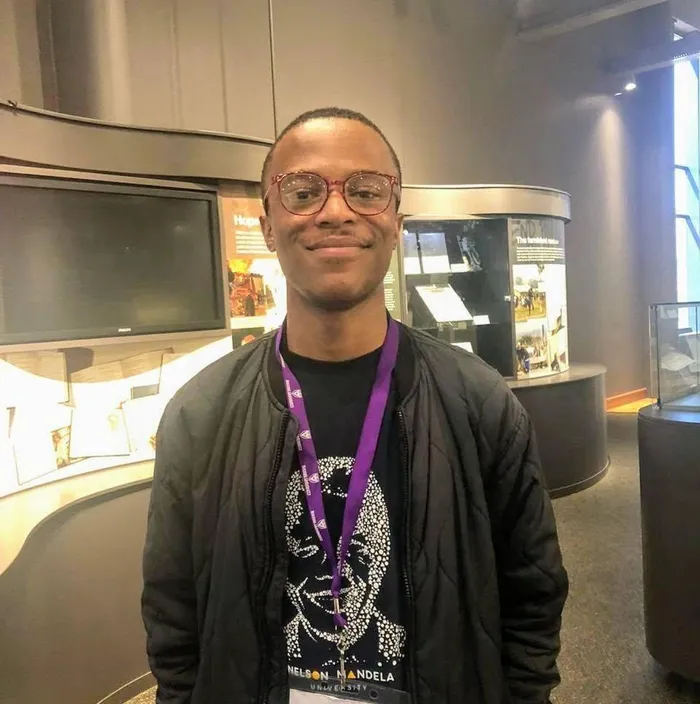
A young innovator from the Eastern Cape is gaining attention for developing AI-powered smart glasses designed to help visually impaired people navigate the world with greater independence.
Elihle Stali, a 23-year-old computer science student, has created a lightweight pair of smart glasses that can identify objects in front of the user and convert that information into spoken audio. The system effectively allows wearers to “hear” their surroundings in real time, offering an assistive tool that could significantly improve daily mobility and confidence.
A Personal Inspiration Behind the Innovation
Stali’s invention is deeply personal. His late grandmother was blind, and her daily dependence on him as a child played a defining role in shaping his mission to build assistive technology.
He recalls becoming her “child navigator” at a young age, guiding her through everyday tasks and witnessing firsthand the challenges faced by visually impaired people.
“Growing up in Zwelitsha, I heard these words from my grandmother every morning. As her full-time child navigator, I made an 11-year-old vow to find a solution that would give her and millions of visually impaired South Africans their ultimate dignity and independence back,” he said.
That promise eventually led to the creation of his startup, Spectacles4TheBlind SA, which focuses on developing accessible assistive technology.
How the Smart Glasses Work
The device, designed to resemble modern AI-powered eyewear, uses built-in artificial intelligence to interpret visual input and translate it into real-time audio feedback.
When the wearer points their head toward an object, the glasses can identify it and describe it aloud, helping users understand their environment without relying on sight. The system is also designed to support multiple South African languages, making it more accessible to local communities.
While still in development, the innovation is being hailed for its potential to improve independence for millions of visually impaired people by reducing reliance on caregivers and assistive assistance in everyday tasks.
Growing International Recognition
Stali’s work has already begun attracting global attention within the startup and innovation space.
He has been invited to participate in the LEAP Startup Competition, where he will have the opportunity to showcase his technology in Hong Kong in July. The event is known for highlighting emerging tech entrepreneurs from around the world and connecting them with investors and industry leaders.
However, attending the competition comes with financial challenges.
To cover travel and participation costs, Stali launched a crowdfunding campaign on BackaBuddy, seeking support from the public to help him attend the event.
Public Support Surpasses Expectations
The campaign, launched just two weeks ago with a target of R80,000, quickly gained momentum.
By June 12, it had already raised R136,547—well above its initial goal. The strong response reflects widespread support for Stali’s vision and highlights growing public interest in locally developed assistive technologies.
A Vision for Dignity and Independence
At the heart of Stali’s innovation is a desire to restore dignity and independence to people living with visual impairments.
His work represents a growing wave of young African innovators using artificial intelligence to solve real-world challenges in healthcare and accessibility.
As he prepares for the international stage, Stali’s journey continues to inspire both local and global audiences, showing how personal experience can fuel technological breakthroughs with life-changing impact.