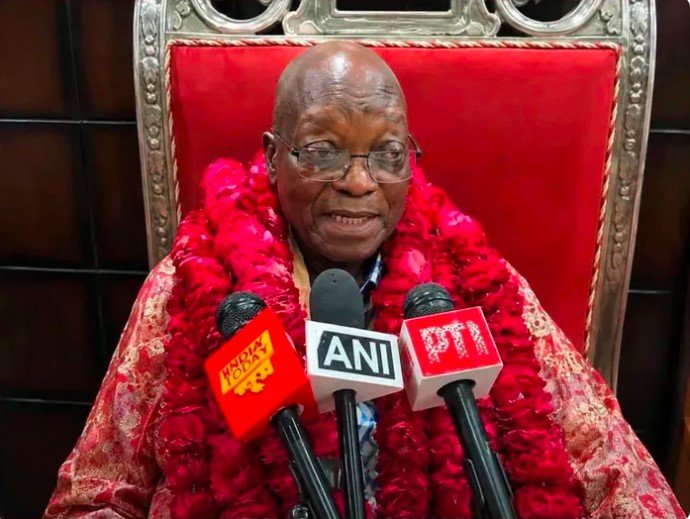
Minister in the Presidency Khumbudzo Ntshavheni has strongly criticised former president Jacob Zuma, accusing him of undermining South Africa’s foreign policy, criminal justice system, and efforts to hold those implicated in state capture accountable.
Speaking during a media briefing on Friday, Ntshavheni said Zuma’s recent conduct sends the wrong message to South Africans, particularly in relation to the government’s ongoing attempts to secure the return of the Gupta brothers, who remain fugitives from South African justice.
The Gupta brothers—Atul, Ajay and Rajesh Gupta—are accused of playing a central role in the state capture scandal, which saw billions of rand allegedly siphoned from state-owned entities and government departments through corruption, fraud and undue political influence. South African authorities have spent years pursuing legal avenues to have the brothers extradited so they can face criminal charges.
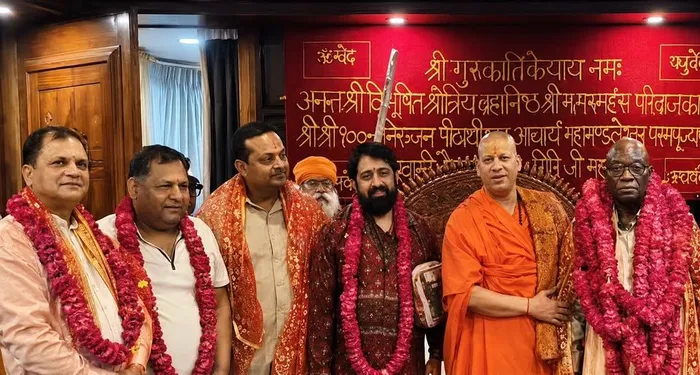
Ntshavheni expressed concern over reports that South Africa’s High Commissioner to India, Ambassador Anil Sooklal, had engaged in conduct that appeared to undermine government efforts to bring the Gupta family back to South Africa. She said government officials stationed abroad are expected to uphold the country’s laws and represent its interests, not assist or appear to support individuals wanted by law enforcement agencies.
“It is a level of disgrace that our own employee, a representative of the Government of South Africa, would associate with individuals facing serious criminal allegations instead of carrying out his responsibility to help ensure fugitives are returned to South Africa to face justice,” Ntshavheni said.
She confirmed that Minister of International Relations and Cooperation Ronald Lamola has requested a comprehensive report into the matter. According to Ntshavheni, government will not hesitate to take firm disciplinary action if any official is found to have acted in a manner that compromises South Africa’s legal processes or international obligations.
Ntshavheni also revealed that government is reviewing the benefits and privileges granted to former presidents. She said while former heads of state are entitled to certain state-funded benefits, these privileges are not unconditional and could be reconsidered if they are used in ways that undermine the Constitution, the rule of law or the country’s institutions.
“Government is entitled to review such privileges if they are abused to undermine the laws of this republic,” she said.
The minister accused Zuma of repeatedly disregarding South Africa’s legal institutions and foreign policy, arguing that his actions have consistently weakened public confidence in democratic institutions.
“This is not the first instance in which this former president has undermined not only the country’s foreign policy but also the laws and institutions of the Republic,” she said.
Ntshavheni reserved particularly strong criticism for Ambassador Sooklal, saying any conduct that appears to support or legitimise individuals accused of corruption damages both the country’s international reputation and the integrity of its criminal justice system.
“The messaging from Ambassador Anil Sooklal is deeply troubling because it directly undermines South Africa’s criminal justice system and sends the wrong signal to citizens who expect public servants to uphold the law,” she said.
She added that South Africans have paid a heavy price for state capture, with billions of rand lost through corruption, weakened public institutions and reduced service delivery. Recovering stolen funds and ensuring accountability for those implicated remain key priorities for government.
Ntshavheni concluded by saying it was disturbing that a former president could behave in a manner she described as openly dismissive of the suffering experienced by ordinary South Africans during the state capture era.
“We have lost a great deal of money through the Gupta brothers’ activities in this country, yet there are still attempts to undermine the process of holding those responsible accountable. Ultimately, it is for South Africans to judge this conduct,” she said.
The government’s renewed comments come as authorities continue pursuing international legal cooperation to bring those accused of state capture back to South Africa, where several investigations and criminal cases remain ongoing. Officials have repeatedly stated that strengthening accountability and restoring confidence in public institutions remain central to the country’s anti-corruption efforts.