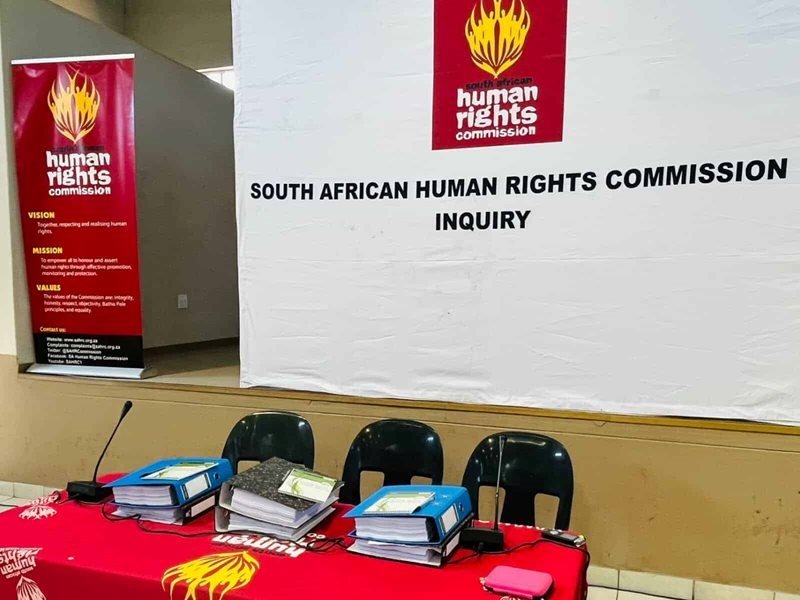
The South African Human Rights Commission (SAHRC) has expressed deep concern over what it describes as a growing pattern of human rights violations targeting foreign nationals, warning that recent incidents of intimidation, forced displacement and alleged unlawful evictions threaten the country’s constitutional values and the rule of law.
The commission’s warning comes as anti-migrant protests continue in several parts of the country, with community groups demanding stronger action against undocumented immigrants. In some areas, escalating tensions have prompted foreign nationals to seek repatriation or leave their communities over fears for their safety.
In a statement released on Friday, the SAHRC said it had received an increasing number of reports alleging serious abuses directed at non-South African nationals.
Among the incidents highlighted were allegations that humanitarian organisations have been obstructed from delivering food, shelter and emergency assistance to displaced people, while volunteers and aid workers have reportedly faced intimidation and harassment.
The commission also raised alarm over reports of individuals and organised groups allegedly conducting door-to-door operations in townships and informal settlements to identify foreign nationals and forcibly remove them from their homes.

It further noted ongoing reports of threats, intimidation and attacks targeting businesses owned by foreign nationals, warning that such actions undermine public order, encourage xenophobia and expose vulnerable communities to greater harm.
According to the commission, while reports emerging from Gqeberha have heightened concern, the incidents reflect a broader national challenge that requires an urgent, coordinated and rights-based response from government and society.
Immigration enforcement must comply with the Constitution
The SAHRC acknowledged that the South African government has a constitutional and legal responsibility to regulate immigration, enforce immigration laws and repatriate individuals who do not have the legal right to remain in the country.
However, it stressed that these responsibilities must always be exercised within the framework of the Constitution and the rule of law.
The commission emphasised that constitutional protections, including the rights to dignity, equality before the law and freedom from violence or degrading treatment, apply to everyone within South Africa’s borders, regardless of nationality or immigration status.
It warned that no individual or community group has the authority to enforce immigration laws independently or deprive others of their constitutional rights through intimidation, violence or unlawful evictions.
Concern over humanitarian access
The commission said it was particularly troubled by reports that humanitarian organisations, faith-based institutions and civil society groups have been prevented from providing essential services to displaced people.
It cautioned that restricting access to food, shelter, medical assistance and other humanitarian support places already vulnerable individuals at even greater risk.
According to the SAHRC, operational challenges faced by government agencies cannot justify denying humanitarian assistance or exposing displaced people to unsafe conditions.
The commission called on all organs of state to ensure that humanitarian organisations are able to carry out their work without intimidation, harassment or unnecessary interference.
South Africa’s international obligations
In addition to domestic constitutional protections, the SAHRC reminded public officials that South Africa is bound by several regional and international human rights agreements.
These include the African Charter on Human and Peoples’ Rights, the International Covenant on Civil and Political Rights and the International Covenant on Economic, Social and Cultural Rights.
The commission also noted that where individuals are detained or otherwise held under state authority, international standards governing the treatment of detainees—including the United Nations Standard Minimum Rules for the Treatment of Prisoners, commonly known as the Nelson Mandela Rules—must be observed.
According to the commission, these legal instruments require states to protect the rights to life, dignity, equality and freedom from cruel, inhuman or degrading treatment without discrimination.
Concerns over repatriation process
The SAHRC also expressed concern about reports that some foreign embassies and consulates have encouraged their citizens to register for voluntary repatriation but have not allocated sufficient personnel or financial resources to facilitate the process efficiently.
The commission said inadequate support risks leaving vulnerable individuals stranded while waiting to return to their home countries.
Despite these concerns, the commission commended officials from the Department of Home Affairs, the Border Management Authority and other government agencies involved in processing repatriations, acknowledging their efforts to manage a complex and demanding situation.
Commission to monitor developments
The SAHRC said it will continue closely monitoring developments across the country and will consider a range of interventions where necessary, including legal action, investigations and engagement with relevant authorities to safeguard constitutional rights.
It urged government, community leaders, civil society organisations and members of the public to reject unlawful conduct and work together to ensure that migration-related challenges are addressed through lawful processes rather than intimidation or violence.
The commission also encouraged individuals and organisations who believe their rights have been violated to report incidents through the SAHRC’s provincial offices or official complaints mechanisms so that appropriate investigations can be undertaken.
The commission reiterated that effective immigration management and the protection of human rights are not mutually exclusive and that upholding the Constitution remains essential to preserving South Africa’s democratic values and social cohesion.