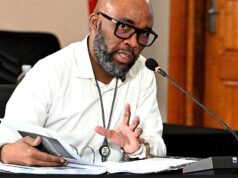
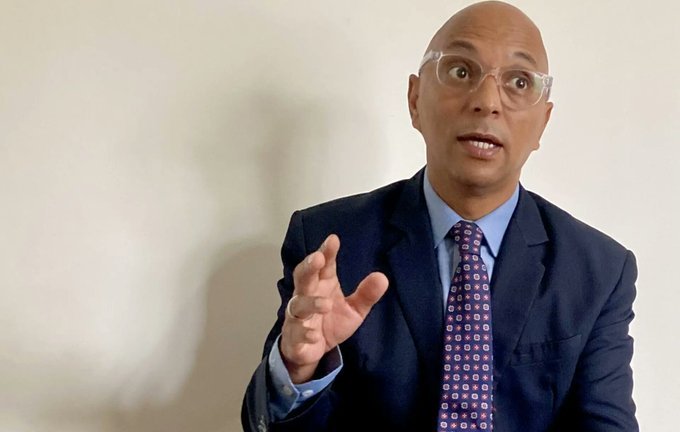
Nursing Boss: He leads with heart and hustle at Groote Schuur but money is a big problem! Nurses cradle new life with tender hands and soothe those at the end of it. Yet through tireless grace, they’re underpaid and risk getting stabbed and robbed on their way to work, says Aghmat Mohamed.
After three decades in nursing, including nine years supervising 1,600 nurses as Director of Nursing Services at Groote Schuur Hospital, he considers himself an ambassador for the profession. While expressing deep passion for his work, Mohamed does not mince his words when outlining challenges in the field. This includes a 26,000 nursing shortfall across South Africa’s public and private sectors, an ageing workforce, training system bottlenecks, uneven distribution of nurses, particularly in rural areas, and simply not enough investment from government.
He says that while nursing shortages in South Africa are nothing new, this pressure is exacerbated by annual budget cuts at public hospitals.
“Currently, we are 26,000 nurses short in the country,” he tells Spotlight. “That’s a lot of nurses. And yet, it is expected that the show must go on. Posts are being cut, the money’s getting less, and there is this full-on expectation of nurses to continue delivering quality care.”
Nursing Boss
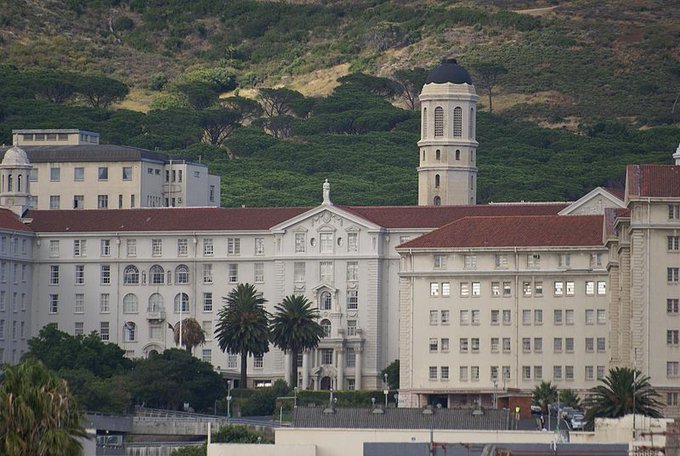
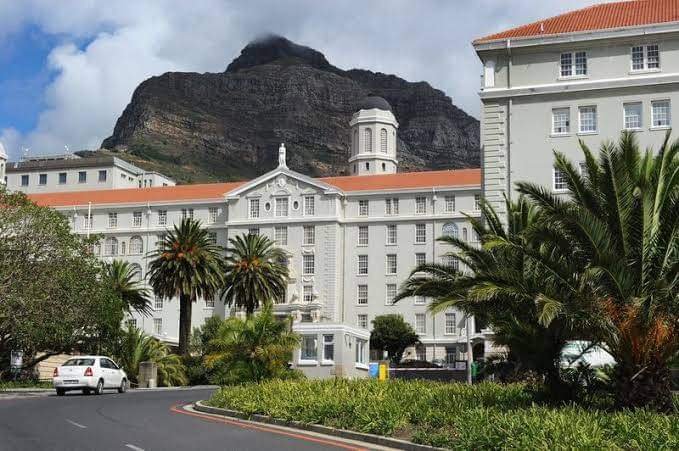
Groote Schuur, Cape Town’s tertiary public hospital giant with just under 1,000 beds, lost 70 professional nurse posts due to budget cuts just last year, says Mohamed.
“Money is the problem,” he says. “Most of any organisation’s budget is staffing, between 60 and 70%. So, the easiest way to decrease costs is by cutting staff. We’ve had budget cuts every single year. I mean, last year I lost 70 posts – professional nurses, just like that. So, how do you continue to deliver quality patient care?”
PLUGGING HOLES
Mohamed notes that at Groote Schuur, there are 532 nurses short across units that provide a 24/7 nursing service. “And it’s the kind of battles that leadership like myself face every single day, trying to plug the holes. Every day we need to compensate for those missing 532 nurses, for example, by using agency nurses, and overtime for our already exhausted and burnt-out nurses.”
He explains how nursing agencies work: “Out of that 532, for argument’s sake let’s say 15 of them are Intensive Care Unit (ICU) specialist nurses, so every day we must get 15 nurses for ICU from agencies.… [I]t’s different nurses from different agencies each day, and it’s not ideal because you don’t know who you are getting, you don’t know how experienced they are. So these are additional stresses that managers in the hospital deal with.”
The concept of “patient acuity” is used to allocate nursing resources, he says. This refers to the severity of a patient’s condition, determining their priority and level of care.
A CALLING BUT ALSO A PROFESSION
Commenting on the professionalisation of nursing, Mohamed notes how the scope of nursing as a profession is ever-expanding, without adjusted remuneration. He points out how in a primary healthcare system, nurses are responsible for more patient care than ever.
“Clinics are run by nurses,” he says.
Mohamed adds that nursing is a profession governed by a nursing council and tertiary qualifications, and ought to be respected and paid accordingly. “You would be surprised how many nurses with PhDs are at the bedside, because they want to be. They just love being with patients. So nursing is a calling, certainly, but it can’t be mahala [without payment]. We need to be properly remunerated.”
STATE OF THE WORLD’S NURSING
On Monday, 12 May – International Nurses Day – the World Health Organisation (WHO) and the International Council of Nurses (ICN) released the State of the World’s Nursing 2025 report. Much in the report echoes Mohamed’s arguments, placing South Africa’s nursing challenges in a global context.
The report notes: “While professionalisation can improve care quality, it should be accompanied by differentiated roles, scopes of practice, and corresponding compensation in work settings, to not fuel nurse migration to countries that offer better professional opportunities.”
GREENER PASTURES
Figures quoted in the report suggest that one in seven nurses worldwide – and 23% in high-income countries – are foreign-born, highlighting the migration of nurses to wealthier countries. South Africa is considered an upper-middle-income country, with an estimated 8% of nurses being foreign-born.
Mohamed can attest. After working as a nurse at the Red Cross War Memorial Children’s Hospital and some community health centres in Cape Town, in 2004, he accepted a job at St James’s Hospital in Dublin, Ireland. To his surprise, the hospital paid for his studies at the Royal College of Surgeons in Ireland, where he obtained a Bachelor of Science degree in nursing and a Master of Science degree in leadership.
“I always knew I wanted to work abroad,” he says. “When I left, it was supposed to be for two years, but that became ten… Literally, doors just opened up for me like, wow! I was so fortunate, I didn’t spend a cent on these two degrees. So, this is how first-world countries retain staff; opportunities lead to job satisfaction.”
Mohamed says healthcare employers in wealthy countries snap up South African nursing graduates. Particularly graduates who specialise in ICU, the operating theatre, trauma and emergency, psychiatry and oncology, are in high demand worldwide.
He argues that the only remedy to retain graduates is South Africa’s government creating better working conditions for nurses and job incentives. “So, government must look at ways of investing in nursing. We need a national strategy. Why is this not prioritised? I want to see more strategies from government – national government, not just provincial government.”
The WHO report attests similarly around domestic investment. “Low- and middle-income countries are facing challenges in graduating, employing, and retaining nurses in the health system and will need to raise domestic investments to create and sustain jobs,” it reads.
DWINDLING WORKFORCE
To start with, South Africa’s nursing graduation rate is low. The report notes 70,552 students enrolled in nursing education in South Africa, with only 3,154 graduating annually. This very low number might, among others, be attributed to recent regulatory and accreditation bottlenecks in the tertiary system, as previously reported by Spotlight. (According to our back-of-the-envelope calculation, there should be around 17,5000 graduations per year given that training typically lasts four years. This calculation excludes people who drop out of training.)
The report also notes South Africa’s ageing workforce, with only 4% of nursing staff aged under 35, and 33% aged over 55. This raises critical red flags for future staffing.
SAFETY CONCERNS
Furthermore, the report states that of the global nursing workforce, 85% are female. In South Africa, this is slightly higher at 90%.
Speaking to Spotlight in the lounge of his home in upper Woodstock, a few blocks away from Groote Schuur, Mohamed outlines urgent safety concerns for his staff, whose shifts are from 07:00 to 19:00, and 19:00 to 07:00.
“It is expensive to live here [near the hospital], and I can’t expect a staff nurse or an assistant nurse to be able to afford even a room around here. So, these women travel far to get to work, getting into a taxi at 04:00, or walking to get a bus with two or three changes. They get robbed, they get stabbed, they get assaulted. So, safety is another big issue. I mean, nursing is a calling,g and that’s fine, but in a country like ours, your safety should come first.”
Reflecting on being Groote Schuur’s first male nursing manager, Mohamed shrugs, exuding pride and confidence in his position.
He intends to celebrate International Nurses Day with a formal event and gift boxes for his staff. “We take any opportunity to boost morale, you can see the effect in people’s facial expressions,” he says.
MANENBERG INSPIRATION
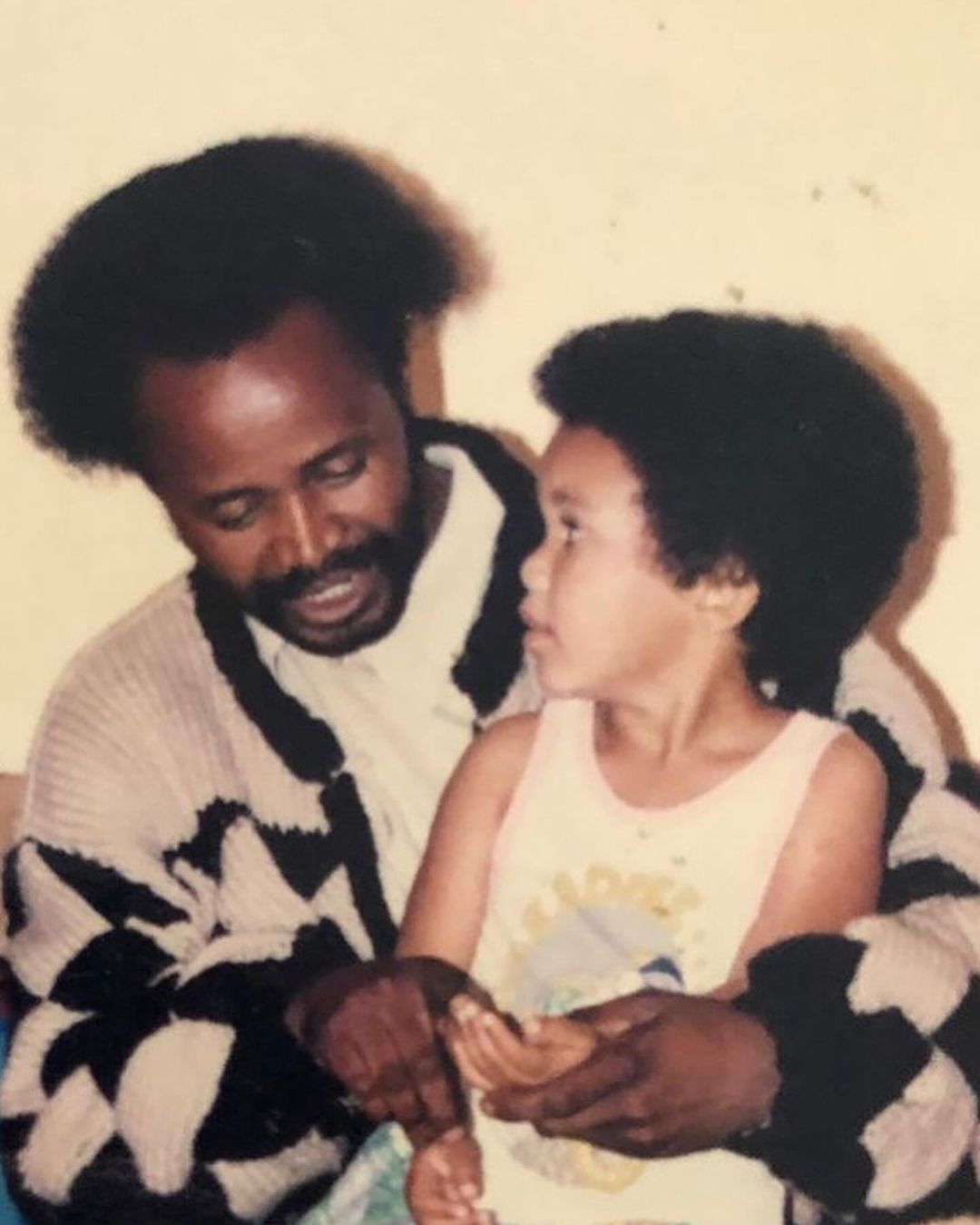
As a child growing up in Manenberg, Mohamed says in the mornings he would stand on a kist (chest) at their front window watching the neighbours – two nurses in crisp uniform – leave for work. “They were two sisters,” he recalls.
Back then, it was safe for them to walk in the dark, he says.
In a poetic twist of fate, one of the neighbours who inspired Mohamed as a child, Sister Shahieda Kader, is now among his staff at Groote Schuur.
Additional inspiration in his formative years was a district nurse who cared for his grandmother, who had a foot wound due to diabetes. “The district nurse would interact with my grandmother and bring a smile to her face. The wound wouldn’t heal, but when the nurse came to our house, we saw how she made that wound better! And eventually my gran was able to walk again. This woman, she brought hope into our family,” he recalls.
Mohamed started his diploma in general nursing at the former Nico Malan Nursing College in 1995, followed by more qualifications. Today, with five bars on his nursing epaulettes, he remains involved in Manenberg. Along with friends, he organises a year-end party for up to 350 elderly people each year.
“It’s because of these older people that we are who we are today,” he says. “You know, they were our role models, so I always feel like I owe them something.”
In other news – Video of Shebeshxt stabb!ng fan during nightclub altercation sparks outrage
Limpopo-born rapper Shebeshxt has once again landed in hot water after a disturbing video surfaced online, capturing him stabbing a fan during a heated exchange at a nightclub.

Known for his aggressive outbursts, the controversial artist has sparked widespread outrage across South Africa for what many say is his most violent incident yet. As the argument intensifies, the rapper unexpectedly pulls out a knife, ignoring pleas from another patron trying to defuse the situation. Read More