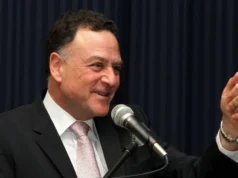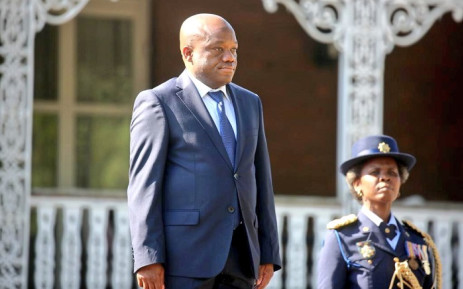
JOHANNESBURG — SPAR Group has been plunged into a fresh leadership crisis after chairman Mike Bosman and deputy chair Dr Shirley Zinn resigned from the company’s board, saying sustained hostility, personal attacks and alleged threats from some current and former retailers and former employees had made their continued involvement with the retailer untenable.
Both resignations took effect on Monday, August 17, marking a dramatic change at the top of the JSE-listed retailer at a time when the group is already navigating a challenging turnaround.
SPAR said the two directors continued to have the full support of the board and that their decisions to leave were made independently, but ultimately because they believed stepping down was in their own interests and in the best interests of the company.
The departures come after months of tension between SPAR and sections of its independent retailer network, adding another layer of uncertainty to a group attempting to restore profitability, reduce debt and rebuild relationships with franchisees.
Bosman and Zinn say a line was crossed

In a joint statement, Bosman and Zinn said they understood that criticism and disagreement were inevitable when serving on the board of a listed company.
However, they said the nature of the hostility they had experienced had gone beyond what they considered acceptable.
“We have been subjected to sustained personal attacks, hostility and, at times, threats,” they said.
The pair did not identify the people allegedly responsible and did not provide details of the threats.
They said a fundamental misalignment had developed between the standards of conduct they expected and the behaviour they had experienced from some current and former SPAR retailers and former employees.
“For both of us, that line has now been crossed to an extent that makes our continued involvement with SPAR untenable,” they said.
Their decision represents a significant setback for board continuity, particularly because both directors had played prominent roles during a period in which SPAR was attempting to address governance concerns, simplify its international operations and strengthen its balance sheet.
Lwazi Koyana takes over as interim chairman
SPAR has appointed independent non-executive director Lwazi Koyana as interim chairman with immediate effect.
Koyana, who chairs the group’s Risk Committee, will occupy the position while SPAR’s Nominations Committee begins a formal process to identify a permanent successor.
The appointment provides immediate leadership continuity, but the simultaneous departure of the chairman and deputy chair means the retailer will have to navigate a potentially delicate board transition while continuing with its broader turnaround programme.
The board thanked Bosman and Zinn for their contributions and said their work had helped strengthen the organisation.
Bosman’s tenure came during a difficult period
Bosman became SPAR chairman in December 2022, when the retailer was dealing with significant governance and operational challenges.
Following the retirement of then-group chief executive officer Brett Botten in January 2023, Bosman temporarily served as executive chairman while the company put a new leadership structure in place.
His tenure coincided with some of SPAR’s most significant strategic changes in years.
The group disposed of its Polish and Swiss operations as part of a broader effort to simplify the business and reduce financial pressure. SPAR also continued working to strengthen its Southern African operations, which remain the core of the group’s business.
SPAR credited Bosman with helping strengthen governance, risk management and internal controls, while also maintaining engagement with shareholders during the restructuring.
Zinn’s role in executive remuneration
Zinn joined SPAR’s board as an independent non-executive director in February 2023 and became deputy chair several months later.
She also chaired the remuneration committee and was involved in changes to the company’s executive pay structures.
Among the reforms was the introduction of provisions allowing executive bonuses to be clawed back in certain circumstances, together with a revised minimum shareholding requirement for executives.
Zinn also served on the nominations and social, ethics and sustainability committees and played a role in board succession and renewal.
Her departure therefore removes another senior director with direct involvement in SPAR’s governance and remuneration framework.
Retailer tensions have been building
The resignations come against a backdrop of increasingly difficult relations between SPAR and some of its independent retailers.
Unlike conventional supermarket chains, SPAR operates through a network of independent retailers who run stores under the SPAR brand and rely on the group for wholesale distribution, support and other services.
That model makes relationships between the corporate group and retailers particularly important.
Disputes over commercial terms, store performance, contracts, supply arrangements and other issues can become complicated because the independent retailers are both customers of the group and operators of SPAR-branded stores.
Bosman has previously argued that disputes involving individual retailers should not necessarily be regarded as representative of the broader SPAR network.
However, the latest resignations demonstrate how seriously tensions have escalated for at least some of the company’s senior leadership.
SPAR is under financial pressure
The board upheaval comes at an awkward time financially.
SPAR’s latest interim results showed revenue from continuing operations rising 3.6% to R67.5 billion for the 26 weeks ended March 27, 2026. But operating profit fell sharply to R740.5 million from R1.35 billion a year earlier, while headline earnings per share from continuing operations plunged 53.9% to 199.9 cents.
The group’s net debt also increased to about R7.3 billion at the end of the period, compared with R5.4 billion at September 2025. SPAR attributed much of the increase to working-capital movements, the timing of creditor payments and other cash-flow pressures.
The deterioration has highlighted the difficulty of the turnaround despite the company’s efforts to simplify its portfolio.
The group had previously reduced net debt substantially after exiting its Polish and Swiss operations, with debt falling from R9.1 billion in 2024 to R5.4 billion at September 2025.
That progress has subsequently come under pressure.
Operational challenges add to the strain
SPAR’s latest financial performance has also been affected by operational problems.
The company reported disruptions at its KwaZulu-Natal distribution centre, while heavy promotional spending and higher debtor costs also weighed on profitability.
The result was a substantial decline in operating profit despite revenue growth, highlighting the challenge facing the retailer as it attempts to improve margins while remaining competitive in a difficult grocery market.
The business is therefore attempting to balance several priorities simultaneously: restoring earnings, controlling costs, managing debt, improving operational efficiency and maintaining productive relationships with independent retailers.
The sudden loss of its chairman and deputy chair adds another challenge.
International exits were meant to simplify the business
One of the defining features of SPAR’s recent strategy has been the withdrawal from underperforming or non-core international operations.
The group has classified its former Poland, Switzerland and United Kingdom operations as discontinued operations as it reshapes the business around its remaining markets.
The strategy was intended to simplify the group and release financial resources for its core operations.
At the end of its 2025 financial year, SPAR reported that the strategic disposals had contributed to a significant reduction in net debt and improved gearing.
However, the financial results for the first half of 2026 showed that the benefits of restructuring have not yet translated into a straightforward recovery in earnings.
What the board faces next
Koyana’s immediate task will be to provide stability while the company searches for a permanent chairman.
The Nominations Committee will have to identify a candidate capable of dealing with a complicated combination of financial, operational and governance challenges.
The next chairman will also inherit the sensitive relationship between SPAR and its independent retailers.
That relationship is arguably one of the most important issues facing the group because retailer confidence is fundamental to SPAR’s franchise model.
The company will need to demonstrate that disagreements can be managed without damaging relationships or creating further disruption at board level.
A difficult moment for SPAR
Bosman and Zinn’s departures are unlikely to be viewed as an ordinary board succession exercise.
Both directors have explicitly linked their resignations to the hostile environment they say they experienced, making the circumstances surrounding their departure potentially as significant as the leadership changes themselves.
At the same time, SPAR is trying to rebuild earnings and manage a balance sheet that has come under renewed pressure.
The company has made progress in simplifying its international footprint and strengthening governance, but its latest financial performance shows that the turnaround remains unfinished.
Now, with its chairman and deputy chair both gone on the same day, SPAR enters another uncertain chapter.
For Koyana and the remaining board, the immediate priorities will be to maintain stability, restore confidence among shareholders and retailers, and ensure that the group’s broader recovery strategy remains on course.
For Bosman and Zinn, the decision to leave appears to have been driven by a belief that their continued presence was no longer sustainable.
“We have therefore each reluctantly concluded that the time has come to step away from SPAR,” they said.
The coming months will determine whether the leadership shake-up becomes a temporary disruption during SPAR’s turnaround — or a sign of deeper problems within the retailer’s relationship with parts of its independent retail network.