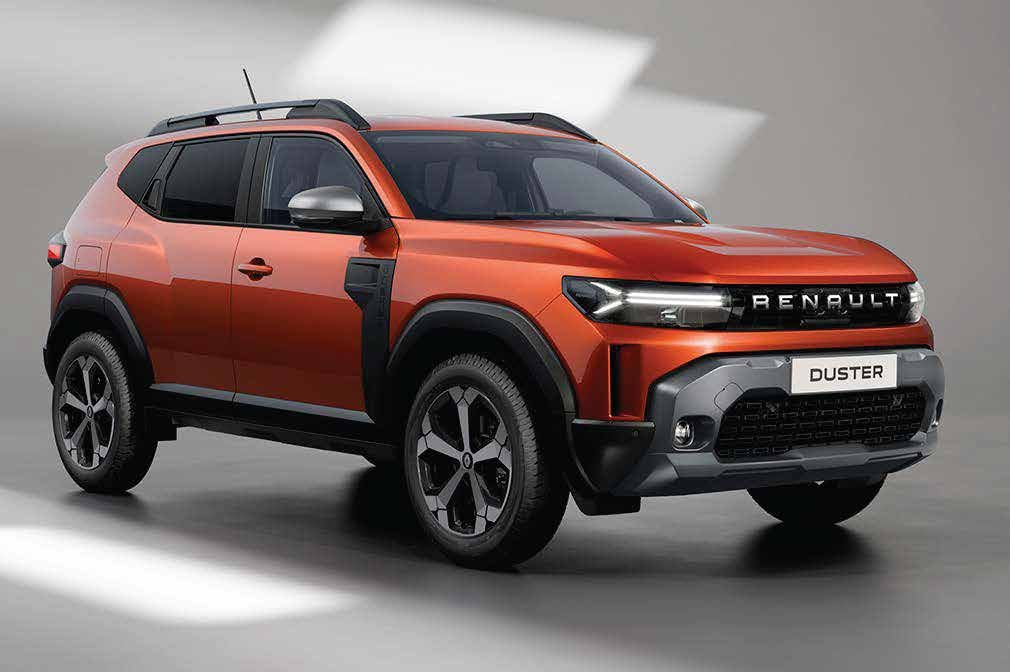
Renault South Africa has given the Duster a significant shake-up for 2026, and the biggest change is one that prospective buyers are likely to notice immediately: the price.
After launching in South Africa in 2025 as a more sophisticated, but considerably more expensive, third-generation model, the Duster is now being sourced from India rather than Romania.
The result is a much more affordable SUV, with the entry-level model priced below R340,000.
The move could give the Duster a much better chance of competing in one of South Africa’s most fiercely contested vehicle segments, where affordability, equipment and running costs are major considerations for buyers.
2026 Renault Duster pricing
The new range is priced as follows:
1.0 Turbo Evolution manual – R339,999
1.3 Turbo Evolution manual – R379,999
1.3 Turbo Techno EDC – R399,999
1.3 Turbo Techno+ EDC – R439,999
1.3 Turbo Iconic EDC – R499,999
That represents a substantial change from the Romanian-built Duster that arrived in 2025.
The previous model’s higher pricing, combined with the removal of the diesel engine that had developed a loyal following among South African buyers, made the latest-generation Duster a harder sell.
The Indian-built model addresses at least one of those concerns by bringing the starting price much closer to what buyers traditionally expected from a Duster.
Built in India, designed for value
The new Duster is based on Renault Group’s modular platform and is marginally longer than the Romanian-built version.
It measures 3,343mm in length and retains the 2,657mm wheelbase, while luggage capacity is rated at 518 litres.
Although the Indian model has styling and specification differences compared with the Romanian version, the overall Duster formula remains familiar: a relatively compact SUV with a spacious cabin, practical boot and rugged-inspired styling.
The lower price is arguably the biggest attraction.
In a market where new-car prices have risen sharply, getting a well-equipped SUV for less than R400,000 is increasingly difficult.
Two turbocharged petrol engines
The new Duster also changes its mechanical recipe.
The hybrid powertrain offered in the previous South African model has been dropped, while the familiar 1.3-litre turbocharged petrol engine remains available.
A new 1.0-litre turbocharged petrol engine has also been introduced as the entry-level option.
The smaller engine produces 74kW and 160Nm and is paired exclusively with a six-speed manual gearbox.
For buyers who prefer an automatic, the 1.3-litre is the more attractive proposition.
It develops 116kW and 260Nm and is available with either a six-speed manual transmission or Renault’s six-speed EDC dual-clutch automatic.
The manual gearbox may appeal to enthusiasts and buyers looking to keep the purchase price down, although the automatic versions are likely to attract the majority of urban SUV buyers.
No diesel and no all-wheel drive
One of the biggest disappointments for traditional Duster fans is that the diesel engine does not return.
The Duster’s diesel derivatives had built a reputation for combining useful torque with relatively low fuel consumption, particularly among buyers who used the SUV for longer-distance driving.
The new range instead relies entirely on turbocharged petrol engines.
Another notable omission is four-wheel drive.
All versions of the Indian-built Duster sold locally are front-wheel drive. While this reduces complexity and helps keep prices under control, it means buyers looking for the more rugged, go-anywhere character associated with earlier Duster models will have to look elsewhere.
For most urban and suburban customers, however, front-wheel drive should be perfectly adequate.
What do you get for R339,999?
The entry-level Evolution is far from a stripped-out budget car.
Standard equipment includes 17-inch alloy wheels, black cloth upholstery, manual air conditioning with rear ventilation and a 7.0-inch TFT digital driver’s display.
There is also remote keyless entry, cruise control and a 10.1-inch touchscreen infotainment system with Android Auto and Apple CarPlay.
A reverse camera is included too.
Safety equipment includes six airbags, tyre-pressure monitoring, electronic stability control and traction control.
That combination gives the entry-level Duster a fairly strong equipment list considering its price.
Techno adds more convenience
Moving up to the Techno specification brings a more upmarket interior, including brown upholstery and a wood-effect finish across the upper dashboard.
It also gains features such as an electronic parking brake, auto hold and paddle shifters for the automatic derivative.
The Techno therefore represents an interesting middle ground for buyers who want the larger 1.3-litre engine and automatic transmission without moving too far up the price ladder.
At R399,999, the 1.3 Turbo Techno EDC is particularly notable because it remains below the R400,000 threshold.
Techno+ takes things further
The Techno+ adds a more substantial collection of luxury and convenience equipment.
Highlights include:
Full LED headlights
Electric panoramic sunroof
Powered tailgate
Dual-zone automatic climate control
Push-button start
Auto-dimming rear-view mirror
Wireless smartphone charging
Armrest with cooled storage
At R439,999, it provides a significant step up in equipment without breaking through the R450,000 mark.
The flagship Iconic
At the top of the range is the Duster Iconic, priced at R499,999.
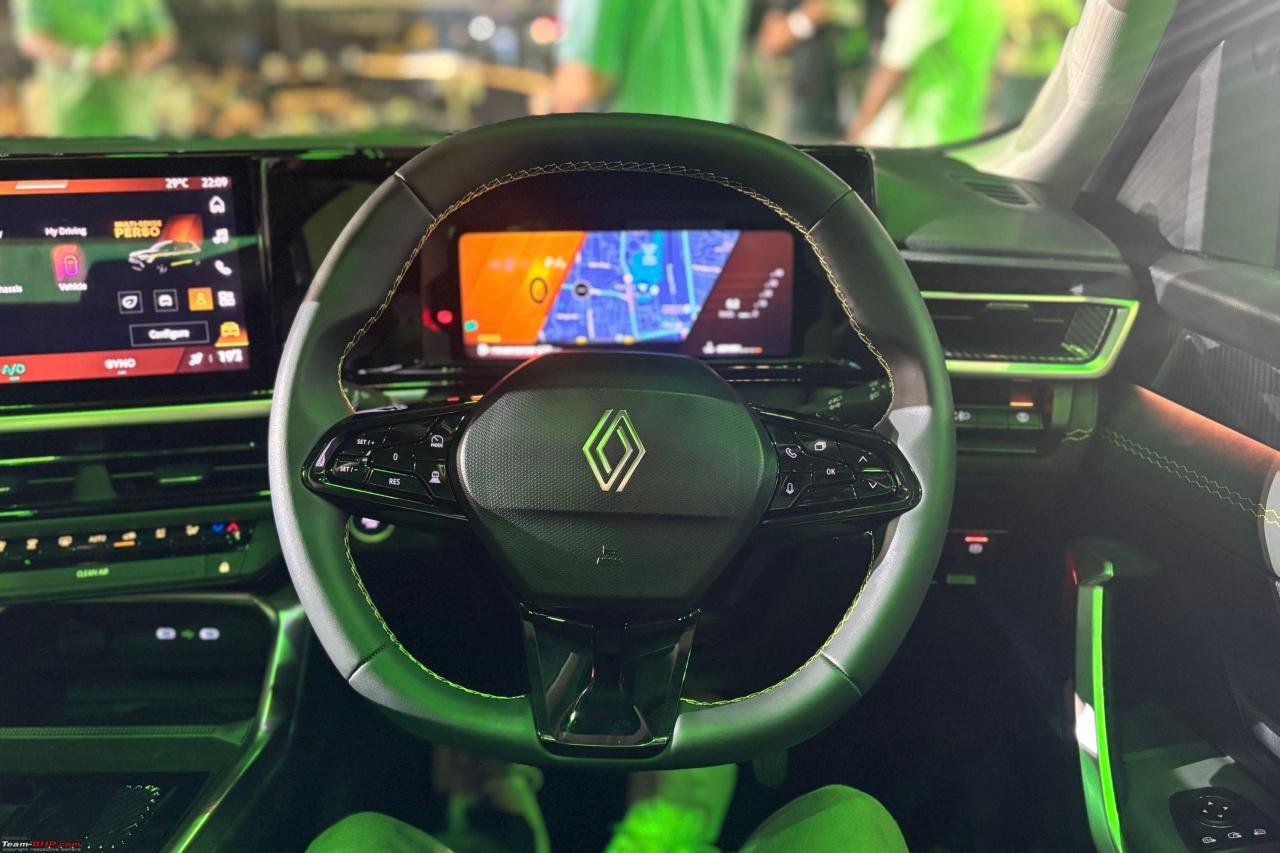
The flagship receives 18-inch diamond-cut alloy wheels and a more premium cabin featuring synthetic leather upholstery, ventilated front seats and matching dashboard finishes with yellow stitching.
The driver’s display grows to 10.25 inches, while the front seats gain electric adjustment.
There is also 48-colour ambient lighting, rain-sensing wipers and three driving modes.
The Iconic is also the model for buyers who want the most comprehensive driver-assistance package.
Its advanced safety technology includes adaptive cruise control with stop-and-go functionality, blind-spot warning, traffic-sign recognition, lane-departure warning and automatic emergency braking.
A very different Duster proposition
The new Indian-built Duster effectively changes the argument around Renault’s popular SUV.
The previous generation arrived with more sophisticated technology and a hybrid drivetrain, but its higher price made it difficult to position against South Africa’s value-focused SUV market.
The new model takes a different approach.
It sacrifices some of the previous specification and drivetrain sophistication in exchange for a much lower entry price.
That could be exactly what the Duster needs.
At R339,999, the entry-level model places the SUV within reach of buyers who may previously have considered smaller crossovers or more basic compact SUVs.
The 1.3-litre automatic versions are also competitively positioned, with the Techno EDC costing R399,999.
The warranty and service package
Renault is offering the new Duster with a three-year/45,000km service plan and a five-year/150,000km mechanical warranty.
For buyers concerned about the long-term cost of ownership, the warranty adds another layer of reassurance to what is now a significantly more affordable SUV proposition.
Is the Duster back where it belongs?
The Duster has always occupied an interesting position in the South African market.
It was never intended to be the most luxurious SUV available, but its appeal traditionally came from offering plenty of space and practicality without demanding premium money.
The new Indian-built model appears to return to that philosophy.
There is no diesel, no hybrid and no four-wheel-drive option, and the entry-level engine is manual-only.
But there is now something that could matter even more to many buyers: a starting price of R339,999.
With the range topping out at R499,999, Renault has also created a broad spread of specifications, allowing buyers to choose between affordability and a much more premium equipment package.
The 2026 Duster may therefore be less about trying to be the most sophisticated version yet and more about returning to the formula that made the nameplate popular in the first place: a practical, spacious SUV at a price that makes sense.